
Body composition analysis measures what your body is actually made of, not just how much you weigh. Using a technique called bioelectrical impedance analysis (BIA), our Accuniq BC380 analyser passes a harmless, imperceptible electrical signal through the body to estimate the proportion and distribution of fat, muscle, water, and bone across different body segments.
The result is a detailed breakdown that BMI is not able to provide. Two people can have identical BMIs and radically different health risks, depending on how their fat is distributed and how much functional muscle they carry.
Indians and other South Asians are at significantly higher risk of visceral fat accumulation even at a normal body weight. This means a BMI within the normal range can mask dangerous levels of fat around the internal organs. Body composition analysis is the most reliable way to detect this pattern.
The Accuniq BC380 generates a detailed printed report immediately after your measurement. Below are examples of the sections included in a typical body composition report.
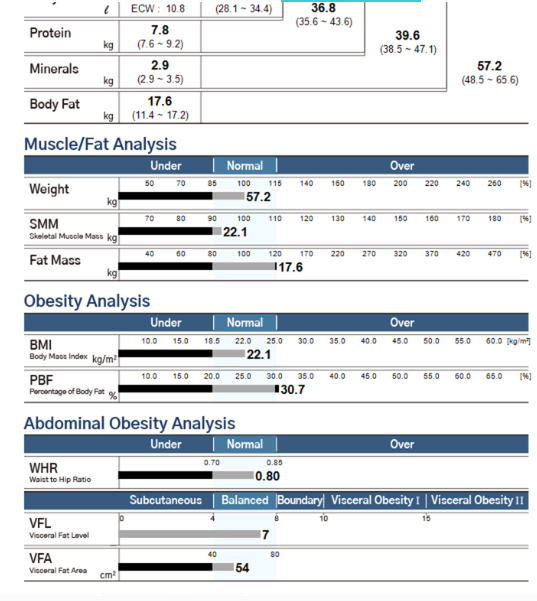
Sample Report.

Lean mass, Fat mass, Body water, Protein and Minerals.

Abdominal obesity analysis: waist-to-hip ratio, visceral fat level, and visceral fat area.

Segmental lean mass: muscle distribution across left arm, right arm, trunk, left leg, and right leg.

Comprehensive evaluation: body type classification, physical age, basal metabolic rate, and target body composition.

Segmental mass radar chart: fat mass and soft lean mass by body segment with bilateral balance assessment.
Before your appointment
You will be measured for height and weight before stepping onto the analyser. BMI is calculated automatically by the system.
You step barefoot onto the Accuniq BC380 platform and grip the hand electrodes. You stand still for approximately 30 to 45 seconds while the device takes its measurement. The electrical signal used is completely imperceptible.
A simple tape measurement is taken around the narrowest point of your waist. This takes under a minute and requires no special preparation.
Your results appear immediately in the Vitalis Fitness Evaluation App. They are reviewed and explained by Dr. Jisha V at the end of your full assessment session, alongside all your other test results.
Your body fat percentage is classified as Athletic, Healthy, Overweight, or Obese using age- and sex-specific reference ranges derived from published clinical data. Visceral fat is classified on a scale from 1 to 20 and above, with levels of 9 and above considered clinically significant and warranting dietary and lifestyle intervention.
Body composition results are not interpreted in isolation. They are most meaningful when read alongside your cardiovascular fitness, strength results, waist circumference, and your broader health history. This integrated interpretation is what Dr. Jisha provides during the consultation at the end of your session.
Bioelectrical impedance analysis is safe for most people. If you have a cardiac pacemaker, implantable cardioverter defibrillator, or any other implanted electronic device, please inform the clinic before your appointment. The test component will be modified or an alternative assessment method will be used.
Yes. The current used is completely safe and cannot be felt. It is not comparable to a cardiac defibrillator or a TENS machine. However, if you have a pacemaker or any implanted electronic device, please inform us before your appointment so we can adjust the assessment accordingly.
Different body composition analysers use different electrode configurations and proprietary algorithms. Results from our Accuniq BC380 may not correspond directly with results from a gym scale, a smartwatch, or a device at another clinic. For accurate tracking of change over time, always use the same device at each assessment.
We do not perform bioelectrical impedance analysis during pregnancy as a precaution, since validation data for this population is limited. We will use alternative measurements instead, including waist circumference, weight, and clinical assessment.
Almost certainly yes. Muscle loss with age, a condition called sarcopenia, frequently occurs without any change in total body weight because fat gradually replaces muscle tissue at similar mass. This pattern is invisible on a weighing scale but clearly visible in body composition data. Detecting it early allows for targeted intervention before it affects your function and independence.
For most people, repeating the assessment every three to six months is sufficient to track meaningful change. More frequent testing does not add useful information, as body composition changes are gradual. Your physician will advise you on the appropriate interval based on your current results and goals.
Our clinic team will guide you through the process from booking to results.
Book Your Assessment