
A complete guide to your CGM sensor. What it measures, how to wear it, and how to get the most from your monitoring period.
A standard fasting blood glucose or HbA1c test gives you a single reading — a snapshot taken at one point in time. Continuous Glucose Monitoring (CGM) records your glucose level automatically every few minutes, day and night, producing a detailed picture of how your body responds to food, activity, sleep, and stress over an extended period.
A CGM sensor is a small device worn on the skin — typically on the back of the upper arm — for a period of one to two weeks. It measures glucose in the fluid just beneath the skin and transmits readings to a smartphone app or reader device. No finger-prick calibration is required. At the end of the wear period, the full dataset is reviewed by our clinical team at a report consultation.
Step 1: Sensor application at the clinic
The CGM sensor is applied by our clinical team during a brief appointment. It is placed on the back of the upper arm using a small, spring-loaded applicator. The process takes under a minute and causes minimal discomfort. No needle remains under the skin after application.
Step 2: Activation and scanning
The sensor is activated using the companion smartphone app. Depending on the sensor model, glucose readings are either transmitted continuously via Bluetooth or retrieved by holding your phone close to the sensor. Our team will walk you through this at the time of application.
Step 3: The wear period
The sensor is worn continuously for the duration of the monitoring period, typically 10 to 15 days depending on the sensor used. You can shower, swim, and exercise normally. CGM sensors are generally water resistant for showering and brief swimming. Avoid prolonged submersion. If the sensor detaches before the end of the wear period, contact the clinic for guidance.
Step 4: Keep a food and activity log
To get the most from your CGM data, keep a simple written or phone-based log of your meals, meal times, exercise sessions, and any significant events such as illness, stress, or disrupted sleep during the wear period. This log is reviewed alongside your glucose data at the report consultation and helps explain the patterns your data shows.
Step 5: Sensor removal and report review
At the end of the wear period, the sensor is removed by peeling it off gently. In most cases this can be done at home without a clinic visit. Your glucose data is then reviewed by our clinical team and a report consultation is scheduled to go through your results, explain what the patterns mean, and agree on next steps for your care.
No. There is no fasting requirement for the sensor application appointment. You can eat and drink normally beforehand.
The sensor used at Vitalis Health is currently the Freestyle Libre 2 Plus. The specific device may vary over time as technology evolves, but the process described on this page applies broadly to all flash glucose monitoring and CGM sensors.
Yes. CGM sensors are designed to be worn during normal daily activities including showering and exercise. Most sensors are water resistant for showering and brief swimming. Avoid prolonged submersion such as extended swimming sessions or soaking in a bath. If you are unsure about a specific activity, ask the clinical team at the time of application.
Contact the clinic and we will advise you on next steps. Sensor adhesion is generally reliable, but factors such as excessive sweating, oily skin, or contact with certain personal care products can sometimes affect adherence. An additional adhesive patch can be applied over the sensor if needed.
This depends on the sensor model. Some sensors transmit readings continuously via Bluetooth to your smartphone and require no active scanning. Others store a rolling window of data that must be retrieved by scanning regularly — typically at least once every 8 hours to avoid any gap in data. Our team will confirm the specific scanning requirement for your sensor at the application appointment.
In most cases, no. The sensor is removed at home by peeling it off gently at the end of the wear period. If you have any difficulty or discomfort removing it, contact the clinic.
For most people the sensor is unobtrusive during daily life. It sits flat against the upper arm and is not visible under most clothing. Some people prefer to wear a close-fitting sleeve over the sensor during contact sports for added security.
The application process involves a brief press of the applicator against the skin. Most people describe it as a mild sting lasting a second or two. The sensor itself is not painful to wear once applied.
Isolated unusual readings can occur due to sensor warm-up, rapid glucose change, physical activity, or scanning during a period of physiological stress. Do not make any medication changes based on a single CGM reading without consulting your physician. Bring all questions to your report consultation and the clinical team will interpret your data in full context.
Yes. CGM is increasingly used by individuals without diabetes who want to understand their metabolic response to food, exercise, and lifestyle choices. It is particularly useful for people with prediabetes, those with a strong family history of diabetes, and individuals on a metabolic health optimisation programme.
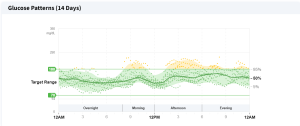
Your physician reviews your full glucose dataset alongside your food and activity log. Key patterns are explained in plain language — including your time in range, post-meal responses to specific foods, nocturnal patterns, and any significant glucose events. Recommendations for dietary, lifestyle, or medical changes are discussed and documented as part of your ongoing care plan.
Our clinic team will guide you through the process from booking to results.
Book An Appointment