
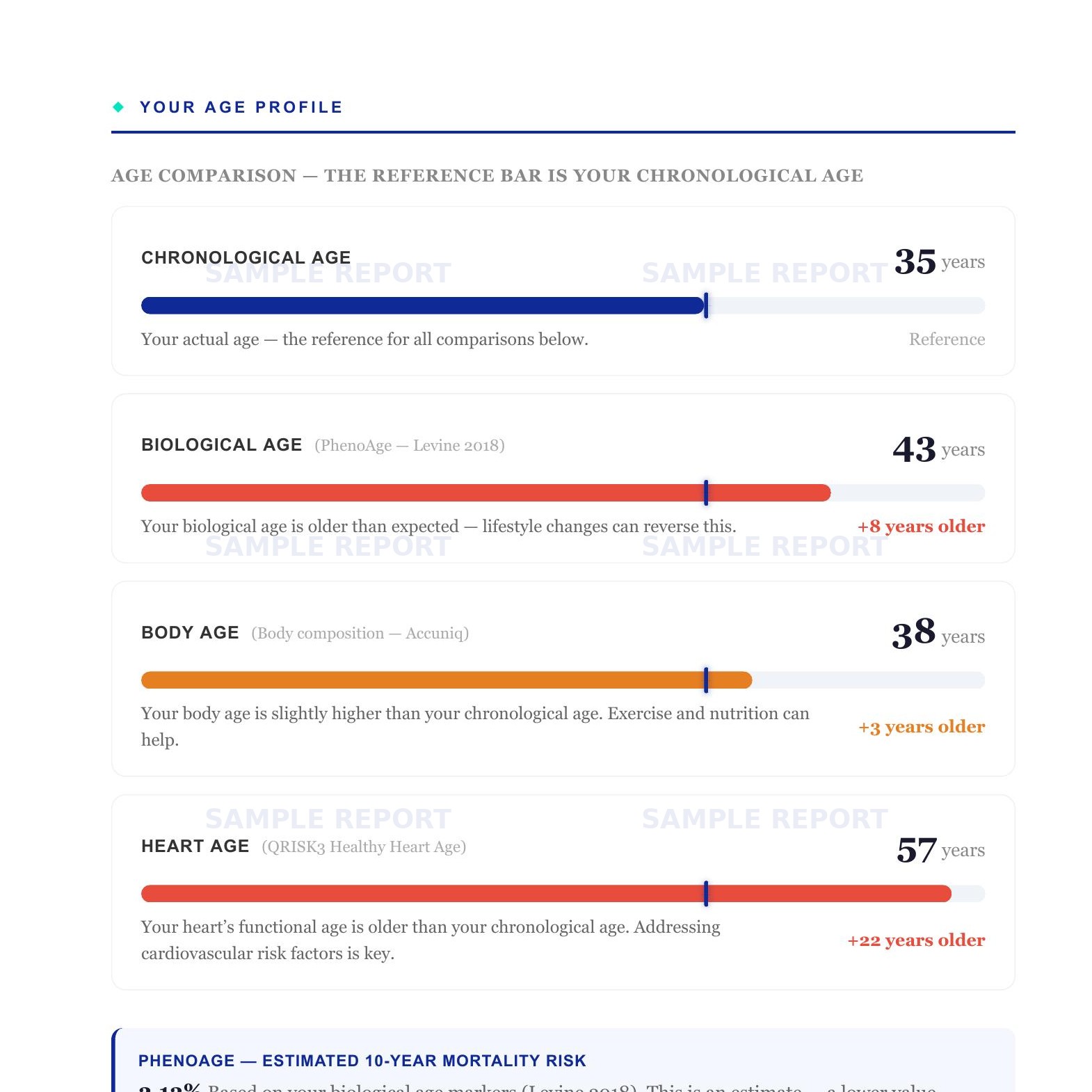
Your chronological age is simply how many years you have been alive. But your biological age, how old your body actually is on the inside, can be very different. Some people at 45 have the metabolic and cardiovascular profile of a 55-year-old, while others are biologically younger than their years. Our Age Profile Assessment calculates multiple age metrics to show you exactly where you stand, what your real age is and what you can do about it.
We calculate three distinct biological age measures, each capturing a different aspect of how your body is ageing.
PhenoAge (Biological Age) uses a validated algorithm based on nine blood biomarkers including albumin, creatinine, glucose, CRP, lymphocyte count, mean cell volume, red cell distribution width, alkaline phosphatase, and white blood cell count. This score estimates your overall biological age and mortality risk relative to your chronological age.
Body Age is calculated from your body composition data including body fat percentage, muscle mass, visceral fat, and BMI, compared against age and sex-matched population norms. It tells you whether your physical body is ageing faster or slower than expected.
Heart Age is derived from your cardiovascular risk scores (QRISK3 and Framingham), translating your heart disease risk into an intuitive age metric. A heart age significantly higher than your chronological age is an early warning signal that cardiovascular intervention is needed.
Biological age is one of the most powerful predictors of future health outcomes. Two people who are both 50 years old chronologically can have very different biological ages, and the one with a higher biological age faces significantly greater risk of chronic disease, functional decline, and premature mortality.
The good news is that biological age is modifiable. Unlike chronological age, your biological age responds to changes in diet, exercise, sleep, stress management, and medical intervention. Tracking your biological age over time gives you a concrete, measurable way to see whether your lifestyle changes are actually making a difference.
Want to know how fast your body is actually ageing compared to your calendar age. Are interested in longevity and want a measurable baseline to track over time. Have risk factors for accelerated ageing such as chronic stress, poor sleep, sedentary lifestyle, or metabolic issues. Want to understand your heart age and whether your cardiovascular system is ageing faster than the rest of your body. Are motivated by data and want a clear metric to guide your health decisions.
Your age profile is one of eight domains assessed in our Smart Whole Body Check-up. Biological age is influenced by every other domain — your metabolic health, cardiovascular risk, kidney and liver function, body composition, nutrition, and mental wellbeing all contribute to how fast or slow your body ages. The check-up evaluates all of these together and calculates your age profile as part of your complete Bio-Physical Profile.
This assessment is part of our Smart Whole Body Check-up, which evaluates eight risk domains to give you a complete, personalised health profile.