
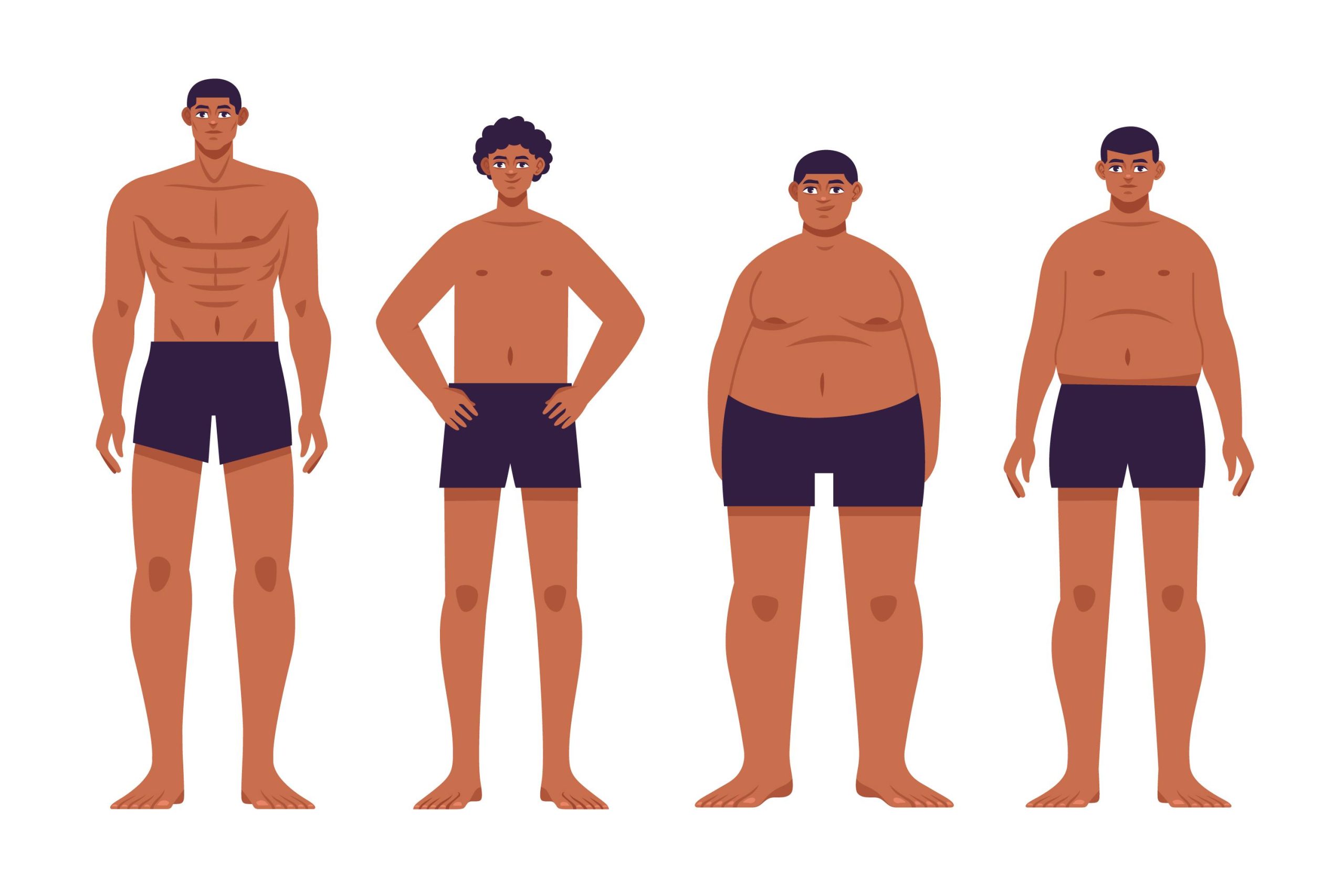
Understanding obesity risk in Indians, and why your waist matters as much as your weight
If you have used one of our online health tools, you may have noticed that your Body Mass Index, or BMI, is the first number we ask about. BMI is a useful starting point, but for people of Indian origin it can be misleading in two important ways. It can make a healthy-looking number seem reassuring when it is not, and it can place someone in a category that sounds alarming when their actual risk is moderate. This article explains how we read BMI for Indians, why the cut-offs are lower than the well-known international figures, and why your waist measurement may matter just as much as your weight.
BMI is simply your weight in kilograms divided by your height in metres, squared. It is a quick way to estimate whether your weight is in a healthy range for your height. The widely quoted international thresholds describe a BMI below 25 as normal, 25 to 29.9 as overweight, and 30 or above as obese. These figures were developed mainly from European and North American populations.

The problem is that body composition differs between populations. At the same BMI, Indians tend to carry more body fat and more fat around the abdomen than people of European descent, and they develop conditions such as type 2 diabetes, high blood pressure, and heart disease at lower BMI levels. For this reason, expert bodies recommend lower BMI cut-offs for Asian Indians.
The Indian medical consensus, first published in 2009 and led by Professor Anoop Misra and colleagues, set lower thresholds specifically for Asian Indians. Under that consensus, a BMI of 23 to 24.9 is considered overweight, and a BMI of 25 or above is classified as obesity. This is notably lower than the international figure of 30 for obesity.
This is because Indians, and South Asians more broadly, demonstrate a distinct body composition phenotype characterised by higher percentage body fat, greater visceral adiposity, and lower skeletal muscle mass at any given BMI value compared to individuals of European origin. This means that at an identical BMI, an Indian individual carries significantly more metabolically active visceral fat, which drives insulin resistance, dyslipidaemia, and cardiovascular risk at a much earlier stage. This phenomenon is sometimes referred to as the “thin-fat” phenotype, a concept well-documented in South Asian metabolic research. Because the standard WHO BMI thresholds were derived predominantly from studies in European populations, they systematically underestimate cardiometabolic risk in Indians when applied without adjustment. The WHO Expert Consultation in 2004 acknowledged this disparity and recommended lower action points for Asian populations, with overweight defined at a BMI of 23 kg/m² or above and obesity at 25 kg/m² or above, compared to the conventional thresholds of 25 and 30 kg/m² respectively used for Europeans. For clinical practice in India, particularly in a lifestyle disease and metabolic health setting, using the Asia-Pacific or Indian-specific BMI thresholds is therefore essential to identify at-risk individuals earlier and intervene before overt disease develops. It is worth noting that waist circumference and waist-to-hip ratio remain important complementary measures, as BMI alone does not fully capture the degree of central adiposity in this population.
Here is the part that surprises many people. You can have a perfectly normal BMI and still carry an unhealthy amount of fat deep inside your abdomen, around your organs. This is called visceral fat, and it is far more harmful than the fat you can pinch under your skin.
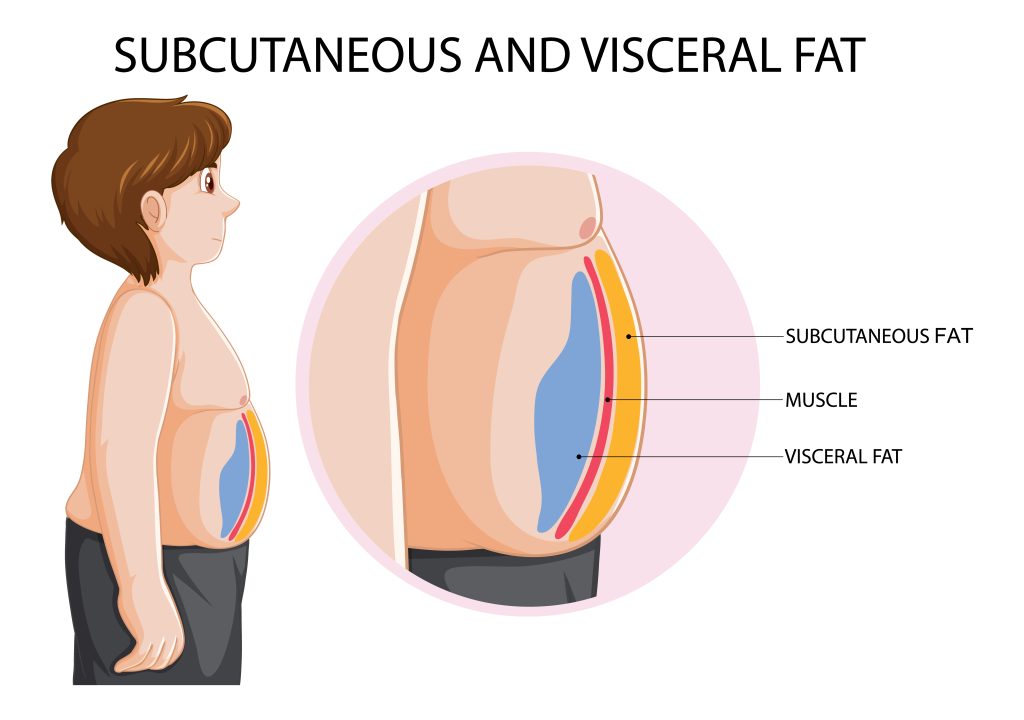
Indians are particularly prone to this pattern. A person can look slim, have a BMI in the normal range, and yet have a thick band of visceral fat that quietly raises the risk of diabetes, fatty liver, high blood pressure, and heart disease. This is sometimes described as being “thin on the outside, fat on the inside.” BMI cannot detect it, because BMI does not know where your fat is stored or whether your weight is muscle or fat.
The 2025 revised Indian definition of obesity recognises this directly. It moved away from relying on BMI alone and now incorporates waist measurements and the impact of excess fat on the body, precisely because abdominal fat tells us more about real health risk than a height-and-weight ratio can.
Two simple measurements help reveal hidden abdominal fat that BMI misses: your waist circumference and your waist-to-hip ratio. They take less than a minute to check at home with a tape measure, and they add valuable information on top of your BMI.


If you are above these waist or ratio cut-offs, even with a normal BMI, it is worth discussing with a physician.
Our online tools now let you add your waist and hip measurements as an optional step, so you receive a fuller picture of your risk rather than a BMI figure alone. You can try them here:
Please note: these tools are for education and self-awareness. They do not replace a clinical assessment. If your results suggest increased risk, or if you simply want clarity about your own situation, a consultation with our physician will give you a precise and personalised picture, including body composition analysis where appropriate.
Misra A, Chowbey P, Makkar BM, et al. Consensus Statement for Diagnosis of Obesity, Abdominal Obesity and the Metabolic Syndrome for Asian Indians. Journal of the Association of Physicians of India. 2009;57:163-170. PubMed (PMID 19582986)
Mahajan K, Batra A. Obesity in adult Asian Indians – the ideal BMI cut-off. Indian Heart Journal. 2017;70(1):195. PubMed Central (PMC5903015)
Revised definition of obesity in Asian Indians living in India. Diabetes & Metabolic Syndrome: Clinical Research & Reviews. 2025. PubMed (PMID 39814628)